
A Guide to Understanding Chinese Slangs for Daily Conversation
A Guide to Understanding Chinese Slangs for Daily Conversation

Chinese slang is something that you will commonly encounter if you’re surrounded by Chinese people. These vocabulary words are commonly used in real-life situations to express people’s emotions better.
For many beginners who have just started learning Chinese, these slangs can be quite difficult to understand, especially since most of them are not taught through textbooks. In this article, let’s discuss some of the most common Chinese slangs and discover effective tips for non-native speakers.
When Will Chinese Slangs Be Appropriate

As Chinese slangs lean toward a more casual and informal speech style, using these words might not be appropriate on every occasion. For example, Chinese slang is off limits in professional environments, such as business meetings and academic institutions.
So, when is the right time to start using Chinese slang in conversations? Casual occasions such as speaking with friends and close family members can be a great opportunity to start using Chinese slang. Usually, these informal speech styles are used when speaking with someone you consider close or someone around the same age as you.
Aside from using it to speak directly to your friends and family members, Chinese slang is also very common in online spaces such as social media. With its more casual approach, online spaces often pick up with new trends and words quicker, making it a great way for beginners to start practicing Chinese slang.
| Chinese slangs | Meaning |
| 爆灯 ((bào dēng) | Full marks/perfect score; used for praises |
| 摸鱼 (mō yú) | Slacking off at work |
| 666 (liù liù liù) | Awesome/impressive |
| 内卷 (nèi juǎn) | Pointless competition |
| 夜猫子 (yèmāozi) | Night owl |
| 刷屏 (shuā píng) | Going viral |
| 摆烂 (bǎilàn) | Giving up, not caring |
| 卷 (juǎn) | Overwork |
| 吃土 (chī tǔ) | To be broke/low on cash |
| 社交牛逼 (shè jiāo niú bī) | Social butterfly/super outgoing |
| 搞笑 (gǎo xiào) | Hilarious |
| 玻璃心 (bō li xīn) | Someone overly sensitive |
| 打鸡血 (dǎ jī xuè) | Full of energy |
| 爱谁谁 (ài shéi shéi) | Whatever |
| 才不呢 (cái bù ne) | No way |
Common Chinese Slangs for Daily Conversation
There are many Chinese slang words that you may encounter in daily conversations. Learning everything in one night may seem impossible, especially if you’re still learning conversational Chinese for day-to-day activities. In this section, let’s see some common Chinese slang that you may encounter when interacting with Chinese people.
Tips on Learning Chinese Slangs for Beginners

Learning Chinese slang can be overwhelming at first, especially if you’re still trying to understand standard Chinese language for everyday use. However, it is important to remember that no one will be forcing you to understand all Chinese slang in one night. Therefore, you can learn them gradually and focus on the most common terms you encounter everyday.
As references, here are some tips on learning Chinese slang for beginners that you may find useful!
Understand Daily Conversations
Before moving on to using Chinese slang on interactions, the first thing you need to do is understand standard Chinese for day to day conversation. Learning conversational Chinese can be a solid foundation in helping you acquire more vocabulary and nail down your pronunciation better. Learning standard Chinese language is also important to help you distinguish situations that might force you to use a formal approach of this language. Therefore, you will still be able to communicate in Chinese even in a more professional setting.
Watch Chinese contents
Chinese media is often the best way if you want to learn Chinese slang quickly. However, not every content can be suitable for your learning purpose. If you’re aiming to learn Chinese slang through different media, make sure you find contents that focus on a more casual approach, such as variety shows. This method will help you understand authentic Chinese conversation and give you a better look on how to use Chinese slang according to its context.
Practice in Online Spaces
After learning the basics of standard Chinese for conversation and commonly used slang, the next thing you can do as a non-native who wants to get better in Chinese is by having hands-on experience using the language. This means, you can start using Chinese for your daily conversation to improve your fluency in using the language.
One popular way you can start using Chinese language and slang is by joining online spaces that allow you to speak in Chinese. Learning in an online space is often chosen by many beginners due to its less pressuring setting that allows you to learn from your mistakes. Furthermore, online spaces often feature active communities to help you get connected with people of similar interests with you.
Learning by Teaching Others

When studying for the IGCSE Chinese exam, it isn’t rare for students to group up together and start teaching each other. This process usually encourages students to discuss issues and teach each other about their learning materials.
Many resources have explained how learning by teaching others, better known as the Feynman Technique, is a great way to help you understand a material. When students learn with this technique, they are expected to be deeply knowledgeable about the materials they’re teaching, encouraging them to have a complete understanding beforehand. In learning IGCSE Chinese preparation, this means students should understand and be able to explain grammar rules and contextual usage to others.
Despite its very apparent benefit of encouraging students to understand better, this method might not be suitable if you have limited time. While researching can be a great way to understand concepts, students who cram for their exams should rely on more time efficient methods that focus on the bigger picture.
Learning with a Tutor

When students need extra support to help them understand the IGCSE Chinese preparation, one of the easiest ways is to find a tutor that is an expert in the field. Although many learning resources are now available to access, finding a tutor remains one of the most effective methods to many students for several reasons.
One apparent reason is because learning with a IGCSE Chinese tutor provides students with reliable information that can guide them in learning what matters on the actual exam. Furthermore, learning with IGCSE Chinese tutors can also provide students with direct feedback that points out their weaknesses. This way, they can focus on improving certain aspects that they haven’t mastered yet.
However, learning with a professional IGCSE Chinese tutor might not be affordable for everyone, especially if you’re running with a tight budget. To counter this, you can do a thorough research on tutor pricings and learning structure. Before enrolling in a Chinese tuition for your IGCSE Chinese preparation, make sure you have already understood how effective this learning method can be for you.
Learning through Mockup Exams

Mockup exams are a common way to practice your preparation for IGCSE Chinese exams. To do this, you can try looking for IGCSE Chinese past papers or exam predictions. Although most of these sources are available in textbooks, you may also find some spread on the internet. Doing a mockup exam will not only help you with understanding questions better, but also can help you simulate what a real IGCSE Chinese exam feels like. Aside from that, taking mockup exams can also help you measure your current capabilities and improve your skills later on.
To many people, mockup exams are a great way to refresh one’s memory. This method is extremely useful if you’re working on a limited time frame and need to prepare as soon as possible. Instead of learning every concept one by one, you can train yourself to recognize questions patterns and predict what kind of problems will be on the actual IGCSE Chinese exam.
However, it is important to note that this method might not be effective for students who don’t have prior knowledge in Chinese. Going into mockup exams without preparation may lead to stress. It is usually recommended for students to at least understand the mandatory vocabulary lists and grammar rules before utilizing mockup exams as a study method.
Is There One Correct Way to Learn IGCSE Chinese?
So, is there one correct way to learn IGCSE Chinese effectively?
The answer is no, since each student requires different learning methods that correspond with their learning style. Sometimes, this method can be found through a process of trial and error, where students need to compare how much materials they understand with a specific learning method.
In other situations, one learning method might not be enough to master your IGCSE Chinese exams. For instance, most students who learn through textbooks also take IGCSE Chinese courses or mock tests to help them gain extra knowledge and prepare themselves for a smoother exam session. This method is commonly encouraged for a better learning journey that aims to sharpen students’ skills.
Learn Conversational Chinese with Elite Linguistic Academy
Mastering conversational Chinese for everyday communication is not only about the number of slangs you manage to learn, but also how you can use Chinese vocabulary to speak and incorporate the right pronunciation to avoid misunderstandings. To many beginners, this can feel like a difficult task to start, especially if you have limited exposure toward the Chinese language. However, enrolling yourself in conversational Chinese courses can still be the right solution for you.
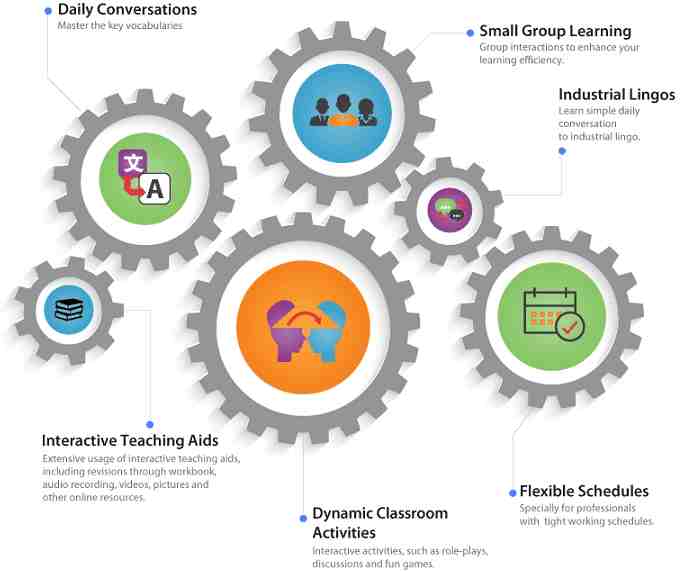
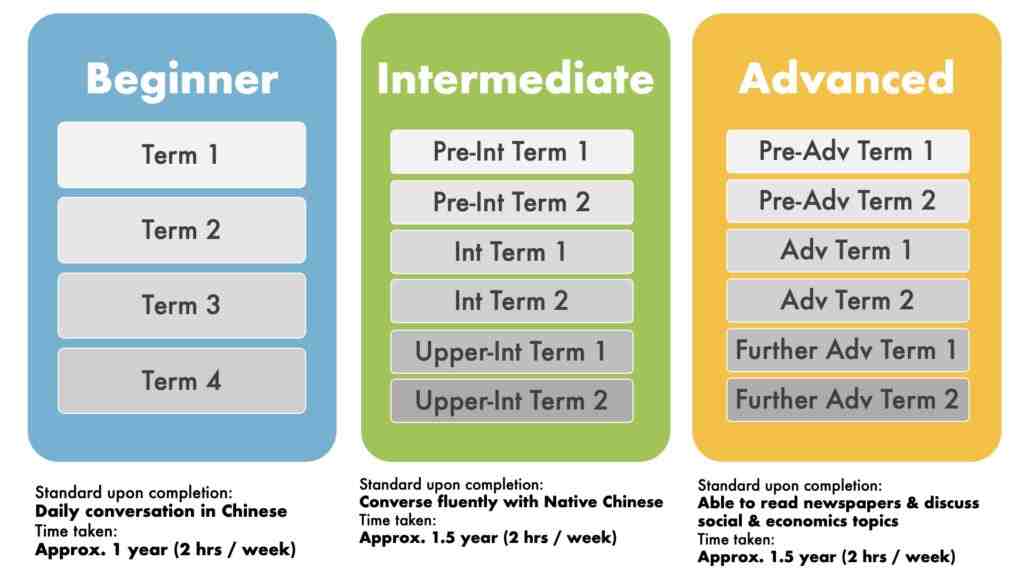
In Elite Linguistic Academy, we provide you with an effective curriculum suitable for beginners to advanced level. With our student-centric approach, you can experience learning Chinese with hands-on experience to prepare you for real life situations. Learn more about our Chinese courses by visiting our website.
Contact us
+65 8885 7668 (Group Class)
+65 8509 6088 (Private Class)
Email: [email protected]