
100 Most Common Words to Help Beginners Learn Chinese
100 Most Common Words to Help Beginners Learn Chinese

For beginners, learning Mandarin can be challenging due to the number of Chinese characters and vocabulary they need to remember. With approximately 50.000 Chinese characters and 100.000 words to master, beginners can start with commonly used phrases and characters to help with simple communication. Whether you’re learning Mandarin for conversational purposes or to help boost your career, Chinese vocabulary plays an important role in fluency. So, let’s learn about the most common Chinese words and how to learn them effectively as beginners.
YOU MIGHT ALSO LIKE: Mandarin for Professionals: Differences Between Business and Casual Mandarin You Should Know
Why Beginners Should Learn Chinese Vocabulary
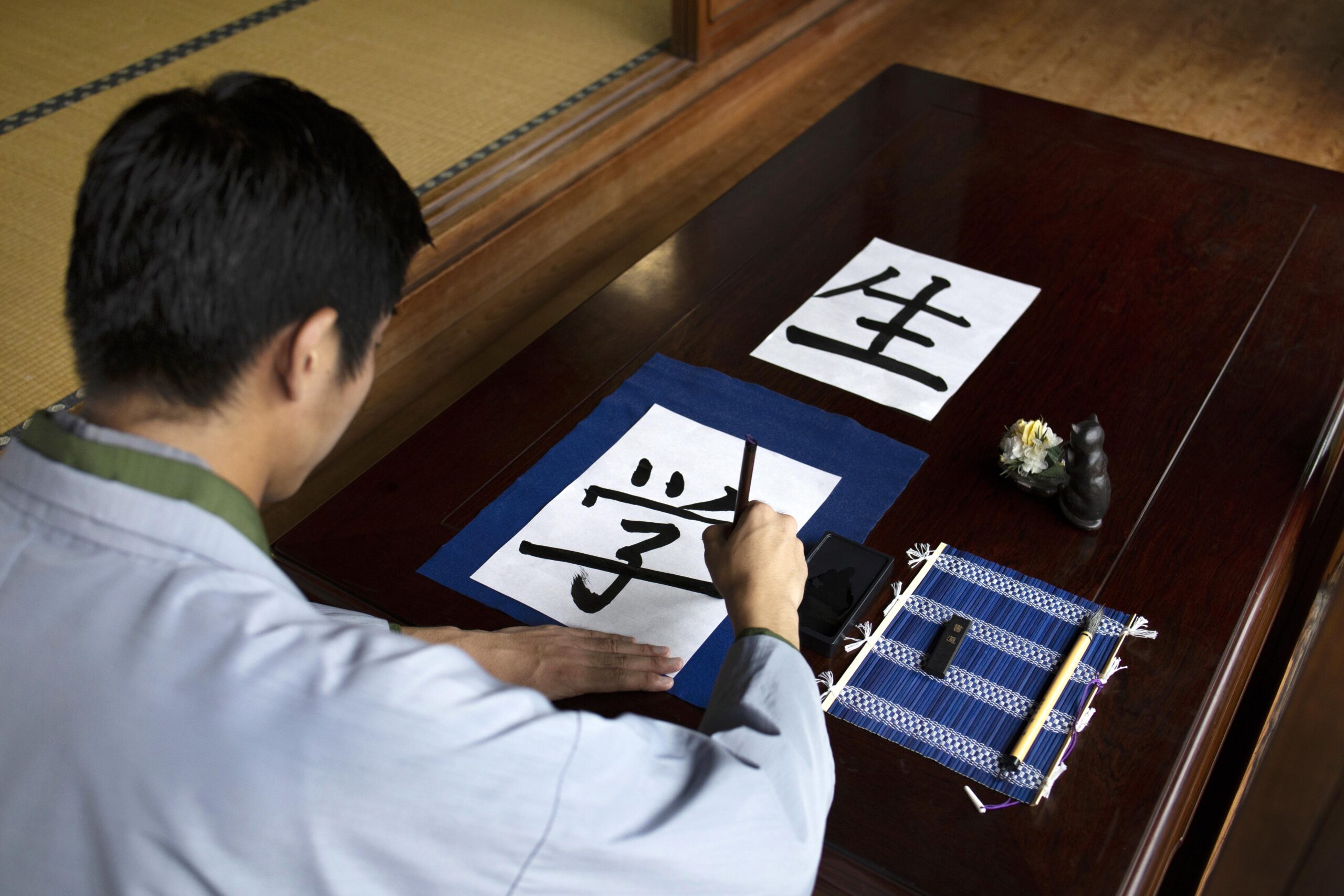
From Pinyin to Chinese characters, there are many ways for you to start learning Chinese as a complete beginner. After acquiring the foundation skills for understanding this language, you can proceed to learn Chinese by mastering vocabulary. Mastering basic Chinese vocabulary allows beginners to apply what they learn immediately, making communication feel more achievable and motivating from the start. By knowing Chinese vocabulary, you can start communicating with others through simple sentences to help boost confidence for further learning.
Aside from its main advantage of supporting immediate usage, you can also learn Chinese vocabulary alongside other Chinese skills, such as pinyin and character recognition. This way, you can learn Chinese efficiently without spending too much time.
YOU MIGHT ALSO LIKE: Essential Business Mandarin Phrases Every Professional in Singapore Should Know
Understanding 100 Most Common Chinese Words for Beginners
There are many Chinese vocabulary and characters that people can learn upon deciding to master Chinese language. These many vocabulary words often pose a challenge, especially for non-native speakers who have just started learning Chinese. However, learning Chinese characters can be easier as long as you know which vocabulary you should master first. Achieving this fluency can be done by understanding the most common Chinese words as listed below.
| No | Chinese Character | Pinyin | Meaning |
| 1 | 我 | wǒ | I/me |
| 2 | 你 | nǐ | You |
| 3 | 她 | tā | She |
| 4 | 他 | tā | He |
| 5 | 的 | de | Possessive particle |
| 6 | 有 | yǒu | Have |
| 7 | 没 | méi | Not/have not |
| 8 | 在 | zài | In |
| 9 | 里 | lǐ | Inside |
| 10 | 周 | zhōu | Week |
| 11 | 秒 | miǎo | Second |
| 12 | 笑 | xiào | Laugh |
| 13 | 不 | bù | No |
| 14 | 了 | le | To know, to understand, already (past tense maker) |
| 15 | 上 | shàng | Above, top, up, previous |
| 16 | 中 | zhōng | Middle, centre, within, among |
| 17 | 下 | xià | Below, down, under, next |
| 18 | 一 | yī | One |
| 19 | 二 | èr | Two |
| 20 | 三 | sān | Three |
| 21 | 四 | sì | Four |
| 22 | 五 | wǔ | Five |
| 23 | 六 | liù | Six |
| 24 | 七 | qī | Seven |
| 25 | 八 | bā | Eight |
| 26 | 九 | jiǔ | Nine |
| 27 | 十 | shí | Ten |
| 28 | 人 | rén | Person/people |
| 29 | 是 | shì | Am, is, are |
| 30 | 大 | dà | Big |
| 31 | 小 | xiǎo | Small |
| 32 | 说 | shuō | Speak, say |
| 33 | 吃 | chī | Eat |
| 34 | 听 | tīng | Listen |
| 35 | 来 | lái | Come |
| 36 | 要 | yào | Want |
| 37 | 看 | kàn | See |
| 38 | 见 | jiàn | Meet, see, appear |
| 39 | 给 | gěi | Give, supply, provide |
| 40 | 叫 | jiào | Call |
| 41 | 喝 | hē | Drink |
| 42 | 用 | yòng | Use |
| 43 | 做 | zuò | To do, make, prepare |
| 44 | 和 | hé | And |
| 45 | 去 | qù | Go |
| 46 | 能 | néng | Can |
| 47 | 这 | zhè | This |
| 48 | 那 | nà | That |
| 49 | 后 | hòu | Back |
| 50 | 前 | qián | Front |
| 51 | 多 | duō | Many/much |
| 52 | 少 | shǎo | Few |
| 53 | 都 | dōu | Both, all |
| 54 | 写 | xiě | Write |
| 55 | 面 | miàn | Surface, side |
| 56 | 地 | dì | Earth, ground, place |
| 57 | 对 | duì | Right, to oppose, to answer, to face |
| 58 | 子 | zǐ | Child, son, seed |
| 59 | 天 | tiān | Day, sky, heavens, weather |
| 60 | 国 | guó | Country, nation, state |
| 61 | 年 | nián | Year, age |
| 62 | 月 | yuè | Month, moon |
| 63 | 也 | yě | Also, too |
| 64 | 会 | huì | Can, be able to, meet |
| 65 | 想 | xiǎng | Want, think |
| 66 | 自 | zì | From, since |
| 67 | 心 | xīn | Heart, mind |
| 68 | 们 | men | Plural marker for pronouns |
| 69 | 几 | jǐ | A few, how many, nearly |
| 70 | 远 | yuǎn | Far, distant |
| 71 | 近 | jìn | Near, close, approximately |
| 72 | 生 | shēng | Life, student, livelihood |
| 73 | 零 | líng | Zero |
| 74 | 书 | shū | Book, letter, script |
| 75 | 长 | zhǎng | Long, lasting, big, elder |
| 76 | 短 | duǎn | Short, brief |
| 77 | 好 | hǎo | Good |
| 78 | 新 | xīn | New, fresh |
| 79 | 古 | gǔ | Old, ancient |
| 80 | 热 | rè | Hot, burning |
| 81 | 冷 | lěng | Cold, frosty |
| 82 | 进 | jìn | Enter, advance |
| 83 | 同 | tóng | Same |
| 84 | 成 | chéng | Become, succeed, finish, complete |
| 85 | 谁 | shéi | Who, whose, anyone |
| 86 | 还 | hái | Also, in addition, more |
| 87 | 日 | rì | Day, date, sun |
| 88 | 家 | jiā | House |
| 89 | 时 | shí | Time, hour, tense |
| 90 | 出 | chū | Out |
| 91 | 行 | xíng | Do, travel, go, walk |
| 92 | 起 | qǐ | Start, rise, begin |
| 93 | 定 | dìng | To set, determine, fix |
| 94 | 所 | suǒ | Actually |
| 95 | 买 | mǎi | Buy, purchase, pay |
| 96 | 卖 | mài | Sell |
| 97 | 开 | kāi | Open, start, hold |
| 98 | 难 | nán | Difficult, hard, troublesome |
| 99 | 公 | gōng | Public, common, fair |
| 100 | 学 | xué | Learn, study, imitate |
How to Learn Chinese Vocabulary for Beginners

After understanding the 100 most common Chinese words for beginners, another question that you might ask yourself is how to learn Chinese vocabulary effectively. Learning effectively is utterly important, especially if you’re working on a tight schedule and have limited time to concentrate on learning Chinese. Although people have their own preferred learning methods, here are a few learning tips that can help you master Chinese vocabulary as beginners.
Use Flashcards
Flashcards is one of the most recommended learning methods that can help promote memorization during language learning. This method is suggested by many experts due to its ability to support active recall and spaced repetition. With this method, your brain will be encouraged to retrieve answers instead of solely relying on traditional or passive learning styles. Furthermore, the constant repetition can also help you to retain better memories on a longer term.
Focus on Real Life Implementation
Many people often struggle with understanding Chinese vocabulary due to the lack of real life implementations. This method, however, is actually one of the most effective ways to learn Chinese vocabulary without relying fully on textbooks. Focusing on real life situations can help you feel more connected with Chinese language and assist people in increasing their intrinsic motivation.
Learn the Context
Another effective way to learn Chinese vocabulary and characters is by learning its context instead of just memorizing. When people learn and understand their context, they are encouraged to find a more natural way to use Chinese vocabulary in sentences and different social situations. Learning Chinese vocabulary by context can assist people in improving their comprehension and recall memories better for practical usage.